
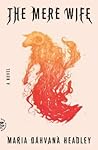
 The Mere Wife: A Novel by Maria Dahvana Headley
My rating: 5 of 5 stars
Read this. The moment you finish your current book, read this. The language is gorgeous, the suburbs are insidious, the mountain is alive, and everyone is a monster and no one is a monster. I might go 4.5 if I could, since I didn't feel deeply emotionally connected to the characters, but that's how I feel reading most classic books. And this will be a classic, I feel. Students could write finals and theses on this. I was wishing I could whip out my pencil and do my English major exercises followed by a discussion.
It's a super hot day and my brain is fried. And anyway, I have in my bag Seamus Heaney's translation of Beowulf which I intend to start the moment I finish this. Wish I could wait for Headley's upcoming translation, but I'm too impatient--I want to read Beowulf and then come back to read The Mere Wife again.
That, my friends, for me, is the sign of a good novel: a reread.
One thing I loved about this novel was how powerful the women felt. Willa may have had her moments, but even she overcame and took charge. Dina, despite her fears, despite moments on the edge, felt in charge. The mothers, a kind of Greek chorus usher people on and off and about the suburban stage, were a magnificent collective creature, cunning. They felt like Mean Girls, but with far more solid, sink-or-swim bonds.
And the whole text has this magic/dreamy/dream-horror feel about it. It'd definitely not horror in the traditional sense, but so much is subtly horrifying.
Like I said: brain fried, Beowulf waiting. Maybe I'll have some more intelligent comments my second time through.
Quote Roundup
The writing was stunning, but I did still manage to flag a few quotes.
p. 152) He doesn't say anything, but she can feel his thoughts now. They're the thoughts men always have. She's spent her life anticipating those thoughts, working around them, pouring their drinks and patting their shoulders, sewing their buttons on tightly so that they can feel secure when they undo everything. No more of that.
p. 153) There's a long tradition that says women gossip, when in fact women are the memory of the world.
p. 174) Willa wonders if her mother has plans for everyone she's ever met, graphic their futures on some invisible chart. Her mother and women like her are the reason men can live at all, running corporations, announcing wars. Every man has a woman at home, and every woman plots the course of the universe, putting it into his breast pocket, like a note attached to a kindergartner, sending him out into his day.
p. 269) Well-preserved. Oh, we hate that phrase. Are we pickles or are we jam? Are we sour or are we sweet?
View all my reviews

No comments:
Post a Comment